
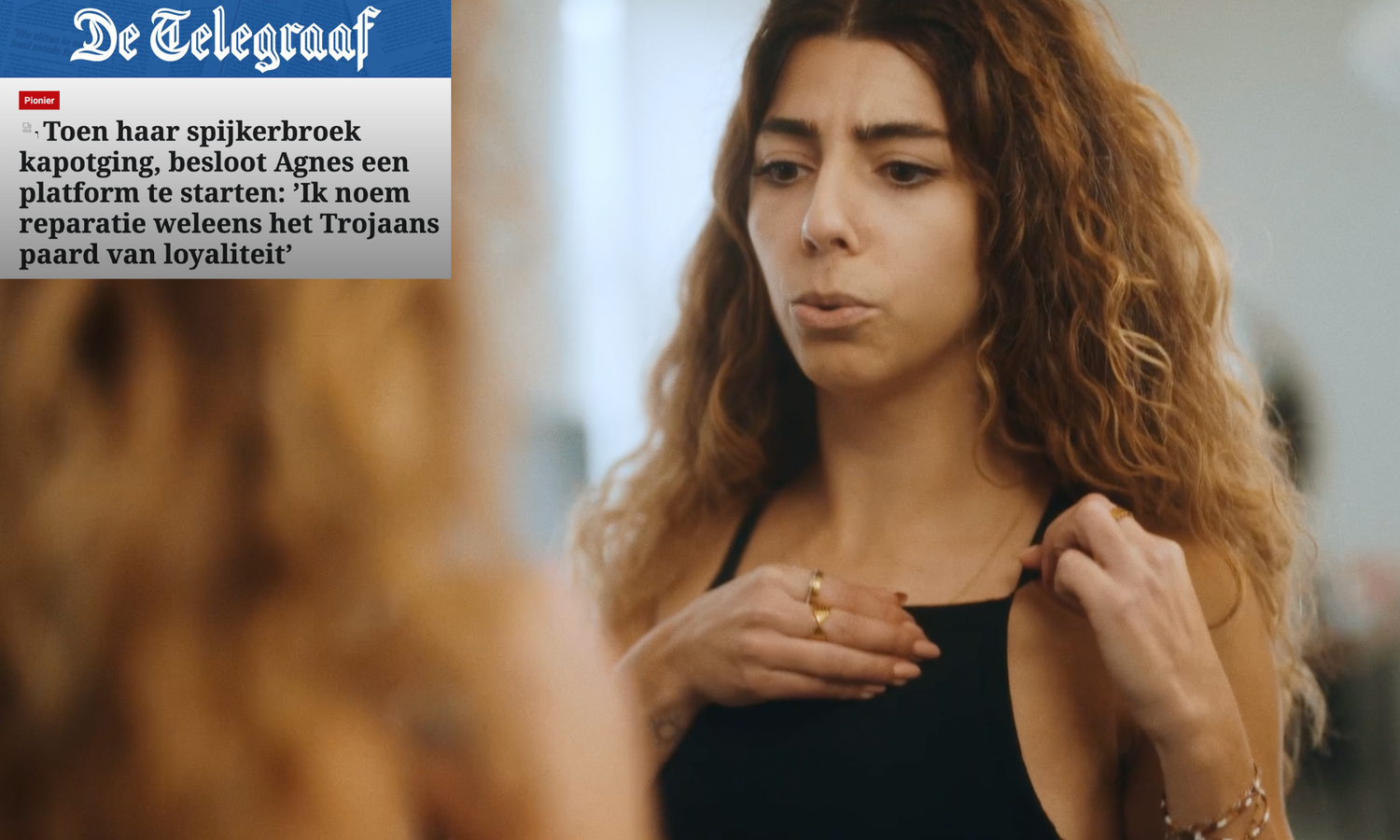
This article was originally published in Dutch by the Dutch newspaper De Telegraaf written by Gabi Ouwerkerk and has been translated into English for our readers.
When the hem of her favorite jeans comes loose, Agnes Weber decides not to let it go. She contacts the manufacturer, but the warranty has expired. And so she gets no help. "They basically said: it's not our problem. But I thought: yes, it is, because you've lost a customer."
That thought was the beginning of Mended, the repair and alteration platform that Weber founded to help companies retain their customers. "We see repair not only as a service, but as a way to build loyalty."
Free repair services are not new; brands such as Nudie Jeans and Patagonia have been offering them for some time, but they remain the exception. "It's unrealistic for every brand to set up such a service themselves. That's why we do it," says Weber, whose clients include Mud Jeans, Tom Tailor, and ARMEDANGELS.
She notes that many brands have a one-sided view of repair. "When we contact them, they often refer us straight to the sustainability manager. But repair is about much more than sustainability. It's also about customer retention, marketing, and literally bringing people back to the store." She laughs: "I sometimes call repair the Trojan horse of loyalty. Companies think they're doing something for sustainability, but they're actually building a relationship with their customer."
MENDED was founded four years ago in Amsterdam and now has five permanent employees, supported by a network of local repair hubs. The company is not yet profitable, but Weber expects that to change in the coming years. The company is growing rapidly, especially in Germany. This year, MENDED was named Start-up of the Year at the largest trade fair for digital marketing and innovation.
"Not only is the market bigger there," she explains, "German consumers also have higher expectations of brands. If something breaks, they believe the manufacturer should repair it. They remind companies of their legal obligations. The Dutch are more forgiving," says Weber. "Or maybe they just don't bother to write an email."
Read the original Dutch article published in De Telegraaf here.





Hinterlasse einen Kommentar
Diese Website ist durch hCaptcha geschützt und es gelten die allgemeinen Geschäftsbedingungen und Datenschutzbestimmungen von hCaptcha.